
Gain More Knowledge About Concrete Construction
Informative blog articles covering important topics, industry trends, and expert insights in concrete construction.
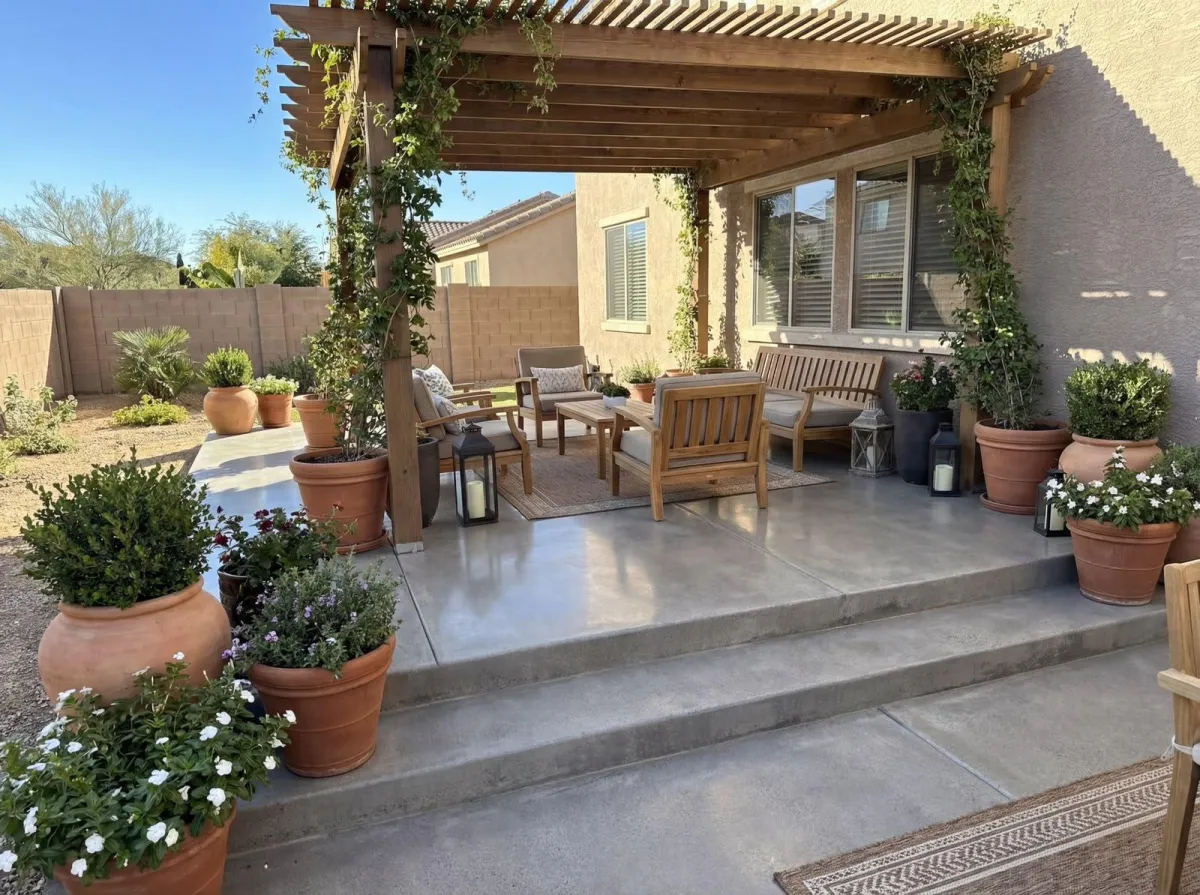
Best Concrete Finishes for Glendale, AZ Patios
Choosing the right concrete patio finish Arizona homeowners can actually count on isn't really just about looks, even though that's usually where people start. Out here in the Sonoran Desert, a patio finish has to survive triple-digit heat, relentless UV exposure, and the kind of sudden monsoon downpour that shows up out of nowhere in July, all without cracking, fading, or turning into a skillet the second someone steps on it barefoot. We've poured and finished patios across the Phoenix metro long enough at this point to know which finishes actually hold up here and which ones just look good on a showroom sample before falling apart after a couple of Arizona summers.
This guide walks through the most popular concrete patio finishes, how each one actually performs against our climate, and what's worth thinking about before you commit to one.
Why Patio Finish Matters More in Arizona Than Almost Anywhere Else
Concrete itself holds up fine almost everywhere. What changes here is the environment that finish has to survive day after day. Surface temperatures on dark, unsealed concrete can climb well past 140°F on a summer afternoon, hot enough to genuinely burn bare skin if you're not careful. Add in UV rays strong enough to fade unprotected dyes and pigments within a couple of years, expansive clay soils shifting underneath every time it rains, and monsoon storms that can drop an inch of water in under an hour, and it starts to make sense why a finish that works great in a mild climate can fall apart fast out here. Picking the right finish isn't really a decorating choice at that point. It's an engineering decision.
Top Concrete Finishes for Arizona Patios
1. Stamped Concrete
Stamped concrete is still one of the more popular choices for Arizona backyards, mostly because it mimics flagstone, travertine, or brick at a fraction of what those materials actually cost. When it's sealed properly with a UV-stable sealer, stamped patterns hold their color surprisingly well against Arizona sun. The tradeoff worth knowing about is that darker color releases can trap heat in the textured surface, so for patios that catch direct afternoon sun, we usually steer people toward lighter, sand-toned or tan releases instead.
2. Acid-Stained and Water-Based Stained Concrete
Stained concrete gives a patio that rich, mottled, natural stone look without adding any real texture depth. Acid stains actually react chemically with the concrete itself, which produces a permanent color that won't peel or fade the way a topical coating eventually will. That's what makes staining one of the more UV-resilient options for an Arizona patio, especially when it's finished with a breathable, UV-rated sealer instead of a film-forming coating that tends to yellow or haze under direct sun over time.
3. Broom Finish
The broom finish is really the workhorse of Arizona concrete. It's simple, it's affordable, and it stays slip-resistant even when the surface is wet during a monsoon downpour. It won't give you the visual upgrade that stamped or stained concrete does, but it's a smart, budget-friendly base to start with, and it can always be stained or coated down the road if you decide you want more style later.
4. Cool-Deck and Textured Coatings
Around pools and other heavily used outdoor living spaces, cool-deck style textured coatings are built specifically to knock down surface temperature and glare compared to standard concrete. They reflect more sunlight than a smooth or dark finish would, and that matters a lot when a patio surface is basically bare-foot territory for half the year out here.
5. Exposed Aggregate
Exposed aggregate finishes reveal the natural stone that's already inside the concrete mix, which gives you a durable, slip-resistant, low-maintenance surface. Since the finish is relying on the stone itself rather than a topical pigment, exposed aggregate resists UV fading better than a lot of colored finishes do, which makes it a solid long-term pick for west- or south-facing patios that take the worst of the Arizona sun all day.
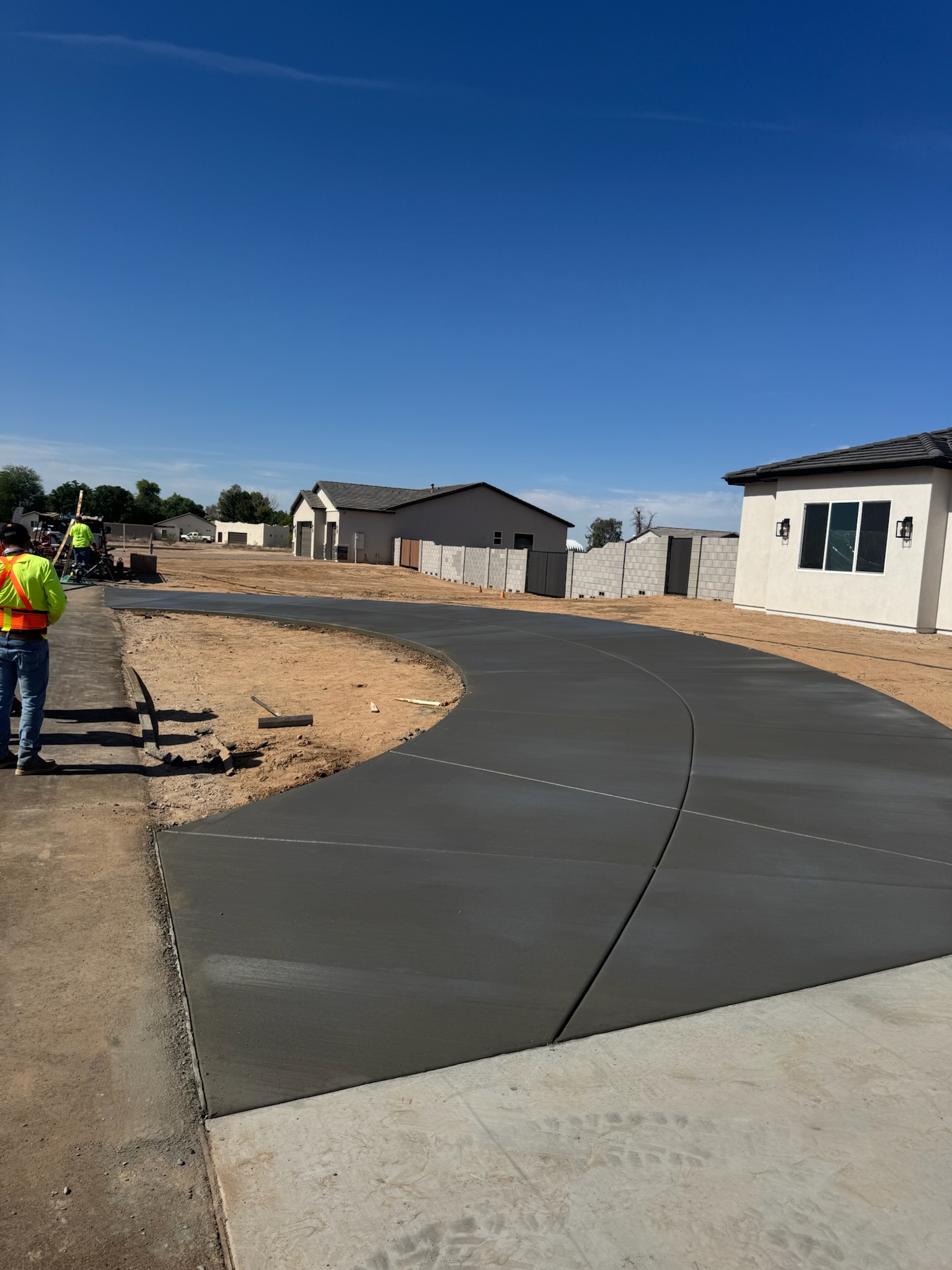
Arizona Climate Considerations: Heat, UV, Monsoons & Clay Soils
Any real recommendation on patio finish has to account for four things that are just part of life in Arizona.
Extreme heat. Dark colors and certain stamped textures soak up and hold heat, which can make a patio genuinely uncomfortable to walk on barefoot by midday. Lighter color releases and reflective coatings go a long way toward keeping surface temperature manageable.
Intense UV exposure. Arizona gets a lot more annual sunshine than most of the country, and cheaper sealers or dyes that aren't UV-stabilized will fade or chalk out within a couple of seasons. We always spec UV-rated sealers on stained and stamped work for exactly this reason.
Monsoon season. Between July and September, sudden, heavy rainfall and runoff are just part of the schedule. The finish needs enough slip resistance to handle that, and the slab underneath needs proper slope and drainage, or water is going to pool and slowly undermine the finish over time.
Expansive clay soils. A lot of the Valley sits on soil that swells when it's wet and shrinks when it dries out, and that puts real stress on any concrete slab underneath. Proper base prep, control joints, and reinforcement matter just as much as the finish itself, because even a beautiful finish poured over a poorly prepped clay subgrade is still going to crack eventually.
Because of all this, we really treat every Arizona patio as a climate-engineering project first and a design project second. The finish is just the last step in a process that starts with soil prep, correct slab thickness, and properly spaced control joints.
How to Choose the Right Finish for Your Patio
Start by thinking honestly about how the space is actually going to get used. A pool patio that sees bare feet all summer long is going to benefit from a lighter, textured, cool-deck style finish. A covered outdoor kitchen or dining patio that stays shaded most of the day has a lot more flexibility, so a darker stain or a stamped pattern is fair game there. Budget plays into it too. Broom finishes and simple stains cost less upfront than heavily stamped or multi-color patterns, and a solid broom-finished slab today can always get upgraded with a stain later if the budget opens up.
It's also worth asking any contractor bidding on the job how they plan to handle drainage and control joints, since those decisions end up affecting how long the finish actually lasts far more than the surface treatment itself does.
Veteran-Owned, Built for Arizona
Ares and Eros Contracting is a service-disabled veteran-owned small business, licensed, bonded, and insured under ROC363389. Our approach to every patio and every concrete project comes from the same discipline and attention to detail our founders brought home from military service. We're not just pouring concrete, we're engineering it to actually hold up against Arizona heat, UV, monsoon runoff, and clay soil, because a patio that looks great for one summer and then falls apart isn't a job well done in our book.
If you're planning a new patio or just want to talk through the best concrete patio finish for your Arizona backyard, our team can walk you through options suited to your yard's sun exposure, layout, and budget. Explore our concrete patio construction services or learn more about our work as a concrete contractor in Phoenix, AZ.
Frequently Asked Questions
1. Does concrete patio color fade in Arizona sun?
It can, if it isn't sealed correctly. Unsealed or poorly sealed dyes and stains can fade within a couple of years under intense Arizona UV. Using a UV-stabilized sealer and reapplying it every 2–3 years significantly extends how long the color actually lasts.
2. What's the coolest concrete finish for a pool patio in Arizona?
Lighter-colored, textured, cool-deck style finishes stay noticeably cooler underfoot than smooth, dark-colored concrete, which makes a real difference on a patio that gets bare feet all summer.
3. Do I need special drainage for a patio during monsoon season?
Yes. Proper slope, control joints, and a well-compacted base are essential to prevent water from pooling and cracking the slab during monsoon storms. This matters just as much as which finish you choose.
4. Is stamped concrete or stained concrete better for Arizona heat?
Both can work well if they're specified correctly. Stamped concrete needs a lighter color release to avoid trapping heat in the textured surface, while acid-stained concrete tends to be more UV-resilient overall since the color reacts chemically with the concrete instead of sitting on top of it as a coating.
5. How often should I reseal my Arizona concrete patio?
Most stained or stamped patios need resealing every 2–3 years with a UV-rated sealer to keep the color from fading and to maintain protection against monsoon moisture. Patios in full, direct sun may need it closer to the 2-year mark.
6. Does Ares and Eros Contracting install patios throughout the Phoenix metro?
Yes. Ares and Eros Contracting is a veteran-owned concrete contractor serving Phoenix, Mesa, Tempe, Scottsdale, Glendale, Goodyear, Buckeye, Surprise, Cave Creek, Queen Creek, Apache Junction, Chandler, and Paradise Valley. We provide free on-site estimates for patio finishes throughout the Valley.
About Ares & Eros Contracting
Ares and Eros Contracting is a veteran-owned concrete construction company serving Phoenix, Mesa, Tempe, Buckeye, Avondale, Goodyear, Surprise, Cave Creek, Scottsdale, Queen Creek, Apache Junction, Chandler, Paradise Valley, and all of Arizona. We specialize in concrete slab and slab-on-grade foundations, structural foundations, sidewalks, curbs, curb and gutter, patios, driveways, concrete paving, and Portland Cement Concrete Pavement (PCCP).
Ready for a free concrete estimate in Phoenix? Call Ares and Eros Contracting today.


Our team is here to answer your questions and help you get started on turning your vision into reality.
With years of experience, we turn complex concrete construction challenges into seamless solutions tailored to your project goals.
ROC363389 CR-9
Licensed. Insured. Bonded.
Menu
Address


© 2026. Ares and Eros Contracting. All Rights Reserved.