
Gain More Knowledge About Concrete Construction
Informative blog articles covering important topics, industry trends, and expert insights in concrete construction.
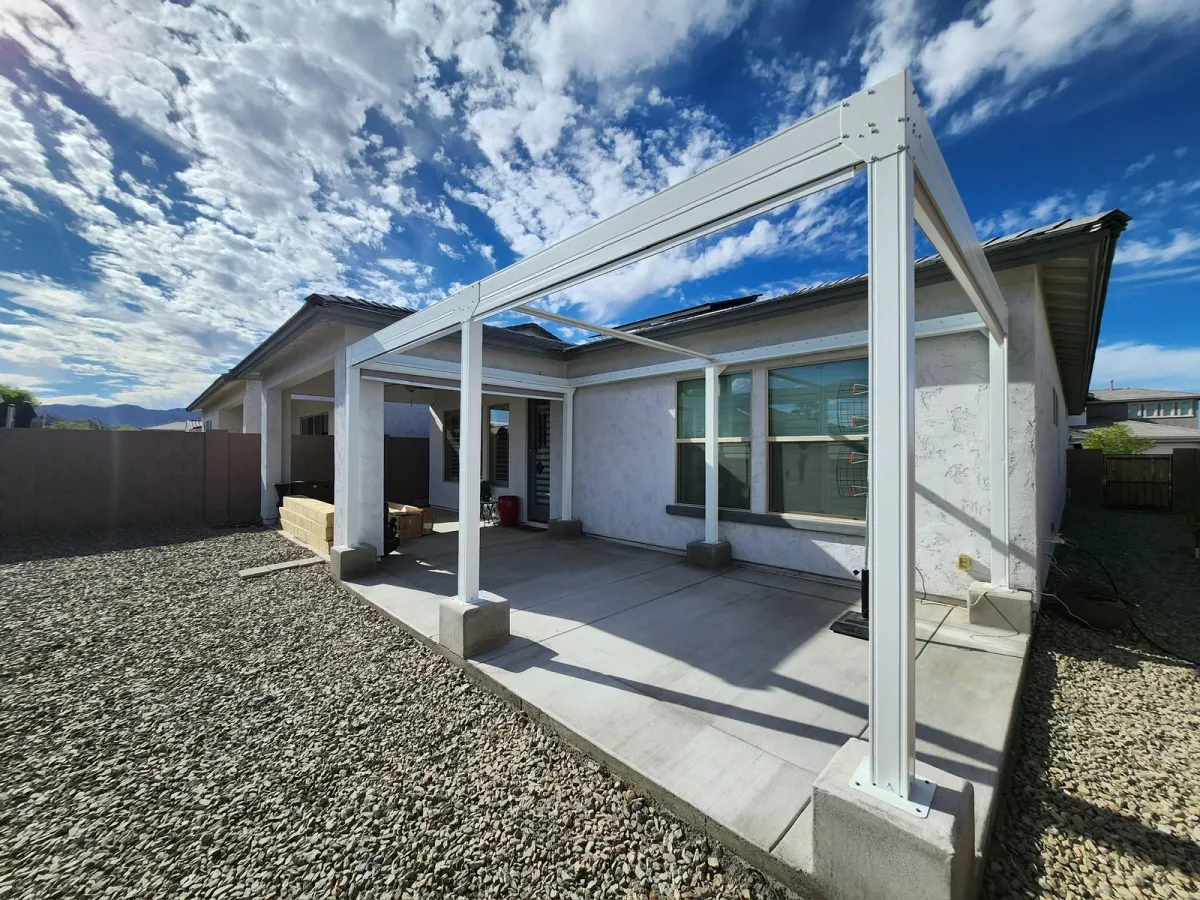
What Is a Slab-On-Grade Foundation? Phoenix, AZ Homeowner's Guide
If you're building a new home anywhere in the Valley, you've probably heard the term thrown around more than once: slab on grade foundation Arizona builders lean on for the vast majority of residential projects. It's not a trend or a preference thing, it's really just the foundation type that makes sense here given our climate, our soil, and our building codes. But "slab-on-grade" is a broad label, and the details underneath it matter a lot once you factor in Arizona's expansive clay, our monsoon storms, and summers that push past 110°F for weeks at a time. This guide walks through what a slab-on-grade foundation actually is, how it gets built, what it costs in 2026, and what changes when it's poured here in Chandler instead of somewhere with milder ground and a normal winter.
1. What Is a Slab-On-Grade Foundation, Really?
At its core, a slab-on-grade foundation is one continuous concrete slab poured right on top of prepared, graded ground. There's no basement, no crawl space, nothing underneath the living area. The slab itself does double duty as both the structural foundation and the finished floor base. Rebar or post-tension cables run through it for reinforcement, and the outer edge is usually thickened up to carry the weight of the exterior walls.
You see this design everywhere across the Sun Belt, and the reason is pretty simple. Without a hard winter freeze, there's no need to dig a footing down below a frost line the way you would in a colder state. That's really the whole story behind why slab on grade foundation Arizona builds tend to go up faster and cost less than a basement or crawl-space alternative would.
Chandler in particular sits on soil that, in a lot of neighborhoods, runs heavier on clay than what you'll find in other parts of the Phoenix metro. That one fact ends up shaping almost every decision that goes into designing a slab out here, so it's worth understanding before you get too far into the process.
2. The Two Main Types of Slab-On-Grade Foundations
Not every slab-on-grade foundation gets built the same way. Out here, contractors are usually choosing between two approaches, and which one makes sense really comes down to the soil report and what the structure needs.
Monolithic (thickened-edge) slabs are the more common route. The slab and the perimeter foundation beam get poured together as one continuous unit. It's efficient, it's cost-effective, and on stable sites it works just fine.
Post-tension slabs take it a step further. Steel cables get tensioned after the concrete cures, which gives the whole slab a lot more resistance to cracking and shifting. You'll see this method specified often on homes sitting on expansive clay, because it lets the slab move and flex as one piece instead of cracking wherever the soil happens to push hardest.
A contractor who knows what they're doing will pull your geotechnical report and let that decide which approach fits, not just default to whatever's cheapest or easiest to sell. Soil conditions should drive that call, not preference.
3. How a Slab-On-Grade Foundation Actually Gets Built
Whether it ends up being monolithic or post-tension, the build sequence follows roughly the same order every time.
It starts with reviewing the soil report, because you can't design anything until you know what you're actually building on. From there the crew handles excavation and grading, cutting the site to the right depth and shaping it so water moves off correctly. Next comes the sub-base and moisture barrier, compacted aggregate goes down first, then a sealed poly vapor barrier over that.
Once the ground work is done, it's time for formwork and reinforcement, setting the perimeter forms and laying out the full rebar or post-tension cable grid. Before any concrete gets ordered, there's a pre-pour inspection to check the reinforcement, embeds, and plumbing sleeves are all where they need to be. Then the actual pour and finish, placing and consolidating the concrete and troweling it to the right elevation. Last comes curing, applying a curing compound and timing the backfill so the fresh pour isn't disturbed too early.
Honestly, most foundation problems trace back to one of these steps getting rushed or skipped somewhere along the way. And in Arizona, the margin for error on that is smaller than it is in a milder climate.
4. Why Arizona Conditions Change the Whole Equation
This is really the part that separates a foundation built for Arizona from a generic slab that could've been poured anywhere. A handful of local factors have an outsized effect on how that slab holds up over the decades it's supposed to last.
Expansive clay soils are probably the biggest one. A lot of Maricopa County, Chandler included, sits on montmorillonite clay, which swells up when it gets wet and shrinks back down as it dries out. That constant push and pull puts real pressure on a slab, and it's one of the leading reasons foundations crack and heave across the Valley. Post-tensioning, deeper footings, or pre-treating the soil are the usual ways contractors work around it.
Monsoon season is the other big one. Between July and September, Arizona storms can dump a serious amount of rain in under an hour, and if the site wasn't graded right, that water pools up against the foundation and accelerates exactly the clay swelling you're trying to avoid. Getting the grading and drainage right during excavation isn't optional here, it's the whole ballgame.
Extreme heat plays a role too. Schedule a pour during a Chandler summer and high ambient temperatures can cause the concrete to set too fast, which cuts into its final strength if the mix isn't adjusted for it. Contractors who actually know the desert use fly ash, plasticizers, and adjusted curing schedules to slow that hydration process down and keep things on track.
And then there's UV exposure, which is relentless here almost year round. Constant sun breaks down sealants and curing compounds faster than it would somewhere with less intense sun, so the products and the timing used on an Arizona slab usually look different than what you'd see in a milder climate.
A foundation contractor who actually understands all four of these things, clay, monsoons, heat, and UV, is working from a completely different playbook than one who doesn't. And you often can't tell the difference just by looking at the finished slab on day one.
5. What Does a Slab-On-Grade Foundation Cost in Arizona?
This depends on slab size, the reinforcement type, and what the soil report calls for, but as a general guide, here's where 2026 pricing sits across the Phoenix metro:
Monolithic (standard residential) slab: $7–$12 per sq ft
Post-tension slab: $10–$16 per sq ft
Soil pre-treatment, if required: $1–$4 per sq ft additional
If your lot has tricky clay or drainage issues, expect to land toward the higher end of those numbers, since it just takes more engineering and prep work to get it right.
6. Why Chandler's Soil Makes This More Than a Formality
Because of where Chandler sits in the East Valley, a lot of neighborhoods here run on heavier clay than you'll find in other parts of the metro. That means the sub-base and reinforcement plan really shouldn't be treated as a copy-paste job. What your lot actually needs, whether that's monolithic or post-tension, how deep the sub-base should go, whether pre-treatment is worth paying for, should come from a geotechnical report specific to your property, not a generic assumption about what "Arizona soil" usually looks like.
This is also where experience on the ground actually pays off. A contractor who's poured slabs all over Chandler for years tends to already know which pockets of town run heavier clay, and adjusts the plan accordingly before the first shovel goes in. Waiting until cracks show up two years later to figure that out is the expensive way to learn it.
7. Questions Worth Asking Before You Hire
Before you sign anything, it's worth putting these questions directly to whoever you're considering:
"What does the soil report say, and how does that change your foundation design?" You want a specific answer tied to your actual lot, not a generic line about Arizona soil in general.
"Are you recommending monolithic or post-tension, and why?" There should be a reason behind it, tied back to the geotechnical report.
"How do you manage concrete placement in summer heat?" Listen for early morning pours, retarding admixtures, adjusted curing, that kind of specificity.
"What's your ROC license number and classification?" A legitimate contractor gives you this immediately, no hesitation, and you can verify it yourself at roc.az.gov.
"What's actually included in your written estimate?" Slab thickness, reinforcement type, sub-base depth, curing method, all spelled out. If it's just a lump sum with no detail, that's a red flag.
8. Built on Military Standards
Ares & Eros Contracting is a service-disabled veteran-owned small business, licensed under ROC363389, and fully insured for concrete and foundation work throughout Arizona. We plan and run every foundation project with the same discipline we picked up in uniform: assess, engineer, execute, verify. There's no cutting corners on the part of the job that everything else in the house is going to sit on top of.
9. Frequently Asked Questions
1. What is a slab-on-grade foundation?
A slab-on-grade foundation is a single, continuous concrete slab poured directly on prepared, graded ground, serving as both the structural foundation and finished floor base. It's the standard foundation type for most Arizona residential construction because the climate doesn't require footings below a frost line.
2. Is a post-tension slab necessary for every home in Chandler?
Not necessarily. It depends on your geotechnical report. Post-tension slabs are frequently recommended on lots with heavier expansive clay because the tensioned cables help the slab resist cracking from soil movement, but a monolithic slab is often perfectly adequate on more stable sites. Your soil report should drive the decision, not a blanket assumption.
3. How much does a slab-on-grade foundation cost in Arizona?
In the Phoenix metro, monolithic slabs typically run $7–$12 per square foot, and post-tension slabs run $10–$16 per square foot. Soil pre-treatment, if your geotechnical report calls for it, adds roughly $1–$4 per square foot. Sites with challenging clay or drainage conditions trend toward the higher end.
4. Why does Arizona heat matter when pouring a foundation?
High ambient temperatures during a Chandler summer can cause concrete to set too fast, which reduces final strength if the mix and curing schedule aren't adjusted. Experienced Arizona contractors use fly ash, plasticizers, and heat-adapted curing to manage hydration properly, often scheduling pours for early morning to avoid the worst of the heat.
5. How does monsoon season affect a slab-on-grade foundation?
Poor site drainage or grading lets monsoon rain pool against a foundation, which accelerates clay soil swelling right where you don't want added pressure on the slab. Correct grading and drainage design during excavation is essential to prevent this in Chandler and across the Valley.
6. Does Ares and Eros Contracting build slab-on-grade foundations in Chandler?
Yes. Ares and Eros Contracting is a veteran-owned concrete contractor serving Chandler, AZ and the entire Phoenix metro, including Phoenix, Mesa, Tempe, Scottsdale, Gilbert, Goodyear, Buckeye, and Queen Creek. We provide free on-site estimates for slab-on-grade and post-tension foundation work.
About Ares & Eros Contracting
Ares and Eros Contracting is a veteran-owned concrete construction company serving Chandler, Phoenix, Mesa, Tempe, Buckeye, Avondale, Goodyear, Surprise, Cave Creek, Scottsdale, Queen Creek, Apache Junction, Paradise Valley, and all of Arizona. We specialize in concrete slab and slab-on-grade foundations, structural foundations, sidewalks, curbs, curb and gutter, patios, driveways, concrete paving, and Portland Cement Concrete Pavement (PCCP).
For a closer look at our full foundation process, engineering approach, and pricing breakdown, visit our slab-on-grade foundation service page. If you're building in the East Valley, our Chandler concrete contractor page covers local permitting and soil considerations specific to that area.
Ready for a free concrete estimate in Chandler? Call Ares and Eros Contracting today.
About the Author: This article was written by Al Baq, owner of Ares & Eros Contracting. A U.S. military veteran, Al brings the same discipline, planning, and mission-first mindset from his years of service to every foundation poured across Arizona.


Our team is here to answer your questions and help you get started on turning your vision into reality.
With years of experience, we turn complex concrete construction challenges into seamless solutions tailored to your project goals.
ROC363389 CR-9
Licensed. Insured. Bonded.
Menu
Address


© 2026. Ares and Eros Contracting. All Rights Reserved.