
Gain More Knowledge About Concrete Construction
Informative blog articles covering important topics, industry trends, and expert insights in concrete construction.
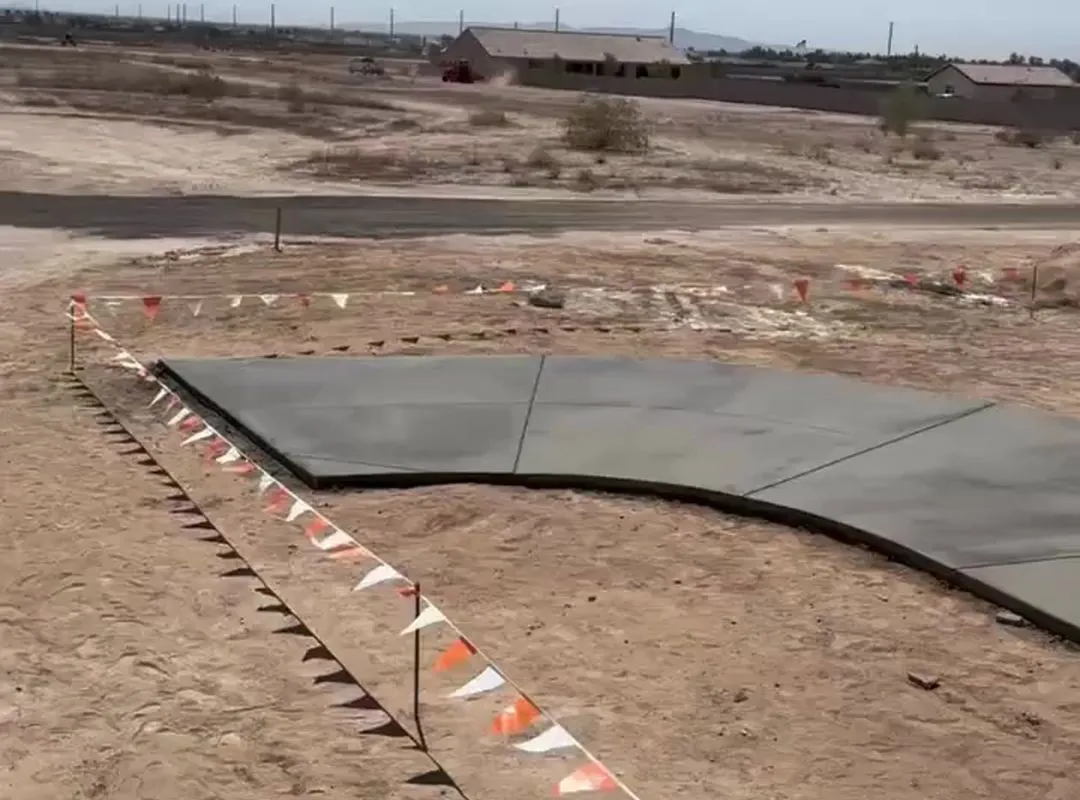
How Much Could Concrete Curb and Gutter Cost per Foot in Glendale in 2027?
For 2027 planning purposes, concrete curb and gutter in Glendale, Arizona could reasonably be budgeted at approximately $31 to $80+ per linear foot for many installed projects. This is a projected budgeting range rather than a verified 2027 contractor price, and actual bids may fall below or above it depending on project size, site conditions, specifications, access, and the amount of preparation required.
The installed cost is not determined by concrete alone. Excavation, subgrade preparation, curb dimensions, forming, reinforcement where required, concrete placement, finishing, joints, curing, demolition, disposal, drainage requirements, equipment access, and restoration can all affect the final price. A long curb-and-gutter run on an open commercial development may also have different unit economics from a short replacement project that requires demolition, hauling, pavement repair, and traffic control.
For homeowners, property owners, developers, builders, and general contractors, the most useful way to approach a 2027 budget is to treat the projected cost per foot as an early planning figure. Once dimensions, quantities, specifications, and site conditions are established, a project-specific estimate provides a much more reliable basis for budgeting and contractor comparisons.
Why 2027 Concrete Curb and Gutter Pricing May Be Different
A 2027 projection should not assume that every contractor will increase prices by the same percentage. Concrete construction costs are influenced by several inputs, including ready-mix concrete, labor, fuel, trucking, equipment, forming materials, reinforcement, disposal, insurance, mobilization, and other operating expenses.
For comparison, a broad 2026 planning allowance of approximately $30 to $75+ per linear foot can be adjusted to approximately $31 to $80+ per linear foot for 2027 planning. The projected range allows some room for potential changes in construction inputs without suggesting that future market pricing is already known.
Actual 2027 conditions could move differently. Material availability, local construction demand, fuel costs, labor conditions, supplier pricing, project specifications, and competition can all affect what Glendale contractors quote. The projected range should therefore be used for preliminary budgeting rather than as a guaranteed market rate.
Curb and Gutter Dimensions Have a Direct Effect on Price
Not every curb-and-gutter section contains the same amount of concrete. The width of the gutter pan, curb height, overall cross-section, transitions, radii, and specified details affect material quantities and labor. Larger sections generally require more concrete per linear foot and can increase forming and placement requirements.
The shape of the project matters as well. A long, straight curb section can typically be constructed more efficiently than work containing frequent curves, driveway transitions, curb returns, drainage structures, ramps, and other interruptions. Those details require additional layout, forming, finishing, and crew time even when the overall linear footage appears similar.
Specifications become particularly important on commercial, municipal, and engineered projects. The contractor may be required to construct a specific curb-and-gutter detail rather than selecting dimensions based on convenience or cost. A useful proposal should therefore identify the curb section included in the price because comparing two per-foot prices without confirming dimensions can create a misleading comparison.
Site Preparation Can Significantly Affect the Final Cost
Concrete curb and gutter needs adequate support and correct elevations. Before placement, the work may require excavation, grading, removal of unsuitable material, compaction, aggregate base, or other preparation specified for the project. These operations affect cost because the contractor is preparing the surface that will support the finished concrete rather than simply placing concrete on existing soil.
Site preparation can become more complicated during replacement work. Existing curb may need to be saw-cut, demolished, removed, loaded, and hauled away while adjacent asphalt, sidewalks, landscaping, utilities, or other improvements are protected. If the existing curb has settled or failed because of poor support or drainage, replacing only the visible concrete may not address the underlying cause.
In those situations, the contractor may need to correct the subgrade, base, elevation, or drainage before installing new curb and gutter. The additional work can increase the cost per linear foot, but addressing the underlying condition is generally more useful than installing new concrete over the same problem.
Reinforcement, Joints, and Specifications Affect Pricing
Reinforcement requirements vary by project. Some curb-and-gutter construction may include reinforcing steel or other reinforcement according to project drawings and specifications, while other installations may use a specified unreinforced section. The contractor should price the actual project requirements rather than assume that one reinforcement approach applies to every installation.
Joint construction also matters because concrete changes volume as it cures and responds to temperature and environmental conditions. Properly located joints help accommodate movement and manage where cracking occurs. The required joint spacing and construction should follow applicable drawings, specifications, engineering requirements, and local standards.
For engineered projects, generalized online recommendations should never replace the contract documents. If a project specifies particular concrete properties, reinforcement, testing, dimensions, tolerances, or inspection requirements, those requirements can affect construction procedures, crew productivity, material quantities, and the final cost.
Drainage Is Especially Important for Curb and Gutter
Curb and gutter is part of a drainage system rather than simply a concrete border. The gutter needs to collect and direct runoff toward the intended drainage path, which means elevations and slopes have a direct effect on performance. Poor grade control can create low spots where water collects or direct runoff toward buildings, sidewalks, neighboring property, or other unintended areas.
Drainage becomes particularly important when new curb must connect with existing pavement, catch basins, scuppers, driveway entrances, retention areas, or other drainage features. Even small elevation differences can affect how water travels through a parking lot, roadway, driveway, or developed site.
Correcting drainage problems can also increase project cost because additional layout, grading, pavement reconstruction, drainage structures, or transitions may be required. For curb-and-gutter work, accurate grading is often just as important as the quality of the visible concrete finish.
Glendale Heat Affects Concrete Installation
Glendale's desert climate creates demanding conditions for fresh concrete. High ambient temperatures, direct sunlight, low humidity, wind, and elevated concrete temperatures can increase evaporation and accelerate setting, which may leave crews with less working time for placement and finishing than they would have under milder conditions.
Those conditions affect project planning as well as concrete handling. Deliveries need to be coordinated with the crew and equipment so concrete does not sit unnecessarily while waiting for placement. Forms, grades, tools, and personnel should be ready before the concrete arrives, particularly when temperatures are high.
Hot-weather placement may also require appropriate curing procedures to limit excessive early moisture loss. A concrete surface that becomes dry and hard quickly should not automatically be interpreted as concrete that has cured properly. For Glendale projects, placement and curing procedures should reflect actual jobsite conditions along with project specifications and concrete supplier requirements.
Access and Equipment Can Change the Price per Linear Foot
Two projects with the same number of linear feet can have very different installation costs because of access. An open development site may allow ready-mix trucks and construction equipment to approach the work directly, making excavation, material handling, concrete placement, and cleanup relatively efficient.
A congested commercial property or residential site can require a different approach. Limited access may require smaller equipment, additional labor, concrete pumping or other placement methods, longer material-handling distances, or additional protection for existing improvements. Those requirements add cost even though the finished quantity of concrete may be identical.
Traffic can create another complication. Projects along active streets, parking lots, entrances, or commercial circulation routes may require traffic control, phasing, temporary access, or work during restricted periods. These requirements increase labor and coordination without changing the number of linear feet being installed.
Project Size Has a Major Effect on Unit Cost
Cost per linear foot generally becomes less predictable on very small projects because contractors still need to mobilize crews and equipment, establish layout, prepare the site, install forms, coordinate concrete delivery, finish the material, and clean up. On a 30-foot repair, these fixed and semi-fixed costs can represent a substantial portion of the total project price.
A 1,000-foot new-construction project distributes many of those costs across significantly more footage. Long, repetitive sections can also improve production efficiency because crews spend more time installing concrete and less time moving between isolated work areas or forming complicated transitions.
That does not mean every large project automatically receives a lower per-foot price. Complex specifications, testing, traffic control, difficult grades, numerous transitions, restricted schedules, or extensive coordination can offset production efficiencies. It does explain why comparing a small residential repair with a large commercial curb package solely on price per foot is rarely useful.
How Much Could 100 Linear Feet Cost in 2027?
Using the projected $31 to $80+ per linear foot planning range, 100 linear feet of concrete curb and gutter could represent approximately $3,100 to $8,000+ for preliminary 2027 budgeting. That calculation is intended to provide a starting point and should not be treated as a contractor quote.
A straightforward new installation with good access can have very different economics from 100 feet requiring existing curb demolition, disposal, excavation, drainage correction, pavement restoration, and traffic control. Corners, curb returns, driveway transitions, drainage structures, ramps, and other details can also change labor and material requirements even when two projects have similar overall lengths.
For early budgeting, the calculation provides a useful allowance. For construction decisions, pricing should be based on actual measurements, site conditions, drawings, specifications, and the complete scope of work.
New Curb Installation vs. Replacement
New construction and replacement work should not automatically have the same cost per linear foot. On a new development, curb installation can often be coordinated with grading, utilities, paving, sidewalks, drainage, and other site improvements. Crews may have better equipment access and fewer existing improvements to protect.
Replacement work introduces additional operations because the existing concrete may need to be saw-cut and demolished before new construction begins. Debris must be removed and disposed of, existing pavement may require repair, and landscaping, sidewalks, utilities, or other improvements may need protection throughout the work.
The contractor must also work with existing elevations. If an old curb or gutter does not drain correctly, matching it exactly could reproduce the same problem. Additional grading or drainage work may therefore be required, which is one reason replacement projects can have a higher unit cost than long new-construction installations.
Residential vs. Commercial Concrete Curb and Gutter
Residential and commercial curb-and-gutter projects should not automatically be priced the same. Residential work may involve driveway transitions, drainage improvements, private streets, small curb replacements, subdivision improvements, or other relatively limited scopes.
Commercial work can involve parking lots, loading areas, site circulation, fire-access routes, drainage systems, and extensive coordination with paving and other site construction. Commercial and municipal projects may also have additional requirements for engineering, testing, inspection, documentation, traffic control, scheduling, and coordination with other contractors.
A general contractor may need the curb subcontractor to work within a larger construction sequence. Grading may need to be completed first, paving may follow the curb, and utilities or drainage structures may need to be coordinated with both operations. These requirements affect labor and project management even when the finished concrete appears similar to residential curb work.
What Should a Glendale Concrete Curb and Gutter Estimate Include?
A professional estimate should clearly identify what the contractor is pricing because linear footage alone does not define the scope. Depending on the project, the proposal may identify demolition, saw cutting, excavation, grading, subgrade preparation, base material, curb dimensions, concrete specifications, reinforcement, forming, placement, finishing, joints, curing, cleanup, hauling, disposal, and restoration.
The proposal should also identify meaningful exclusions. Surveying, engineering, testing, permits, inspection fees, traffic control, unsuitable-soil remediation, utility adjustments, drainage structures, pavement replacement, or extensive excavation may or may not be included in the quoted amount.
This becomes particularly important when comparing multiple estimates. One contractor may include demolition, disposal, grading, base preparation, concrete, finishing, and restoration, while another may assume the site is already excavated and ready for forms. Both proposals may say "concrete curb and gutter," but they are not pricing equivalent scopes.
Property owners and general contractors should compare the work behind each price before comparing the bottom-line totals. For an overview of related capabilities, see AAE's Arizona concrete services, including concrete curbs, sidewalks, slabs, foundations, paving, and other concrete construction.
Why Choose AAE for Concrete Curb and Gutter in Glendale?
Ares & Eros Contracting provides concrete construction services in Arizona, including work associated with curbs and gutters, sidewalks, slabs, foundations, driveways, paving, and other concrete applications. For Glendale curb-and-gutter projects, understanding the complete scope is important because concrete placement represents only one part of the construction process.
Site preparation, grades, drainage, access, concrete requirements, finishing, curing, scheduling, and coordination with surrounding construction can all influence the finished installation. These considerations become particularly relevant for commercial and development projects where curb work may need to coordinate with grading, drainage, utilities, sidewalks, paving, and other trades.
A clearly defined scope also helps owners, developers, builders, and general contractors understand what they are paying for and compare competing proposals more accurately. Property owners and construction professionals can review AAE's concrete construction services when planning concrete work in Glendale and elsewhere in Arizona.
Planning Your 2027 Glendale Concrete Curb and Gutter Project
For early 2027 budgeting, approximately $31 to $80+ per linear foot can be used as a projected planning range for many Glendale concrete curb-and-gutter projects. The range should not be treated as a guaranteed 2027 market price because actual costs can change based on project size, curb dimensions, demolition, excavation, subgrade preparation, reinforcement, concrete specifications, drainage, access, finish requirements, traffic control, testing, restoration, and the construction schedule.
Market conditions can change as well. Ready-mix concrete, labor, trucking, equipment, fuel, and other construction inputs may move differently between the time a project is budgeted and when it is actually built. The closer a project gets to construction, the more useful current supplier pricing, finalized drawings, confirmed quantities, and a project-specific contractor estimate become.
Before selecting a contractor, verify the exact curb detail, quantity, preparation requirements, drainage elevations, concrete specifications, reinforcement, testing responsibilities, inclusions, exclusions, and restoration requirements. For engineered, commercial, or municipal projects, approved drawings, specifications, applicable codes, agency standards, testing requirements, and engineering direction should take precedence over generalized cost guidance.
For project-specific scope and pricing rather than a generalized 2027 projection, request a Glendale concrete estimate from Ares & Eros Contracting.
Frequently Asked Questions
How much could concrete curb and gutter cost in Glendale, Arizona in 2027?
For preliminary 2027 budgeting, approximately $31 to $80+ per linear foot can be used as a broad projected range for many installed curb-and-gutter projects. This is not a verified 2027 contractor price, and actual estimates can fall below or above the range.
Project quantity, curb dimensions, site preparation, demolition, drainage, concrete requirements, equipment access, traffic control, and restoration can all affect pricing. A project-specific contractor estimate should replace the preliminary allowance once the actual scope is established.
How much could 100 feet of concrete curb and gutter cost in 2027?
Using a projected range of $31 to $80+ per linear foot, 100 linear feet could represent approximately $3,100 to $8,000+ as an early planning allowance. This calculation assumes only a broad installed-cost range and does not account for every project-specific condition.
A small replacement project involving demolition, hauling, difficult access, drainage corrections, or pavement repair may exceed that range. Large, repetitive installations can have different unit economics because mobilization and setup costs are distributed across more footage.
Why could concrete curb and gutter prices increase in 2027?
Concrete construction prices are influenced by more than the cost of ready-mix concrete. Labor, fuel, trucking, equipment, reinforcement, forming materials, disposal, insurance, construction demand, and supplier pricing can all affect what a contractor needs to charge.
The $31 to $80+ range used here is therefore a projection for budgeting rather than a claim that Glendale concrete prices will increase by a specific percentage. Actual 2027 pricing should be confirmed with current project-specific estimates.
What specifications should be used for concrete curb and gutter in Glendale?
The correct specifications depend on the project. Private residential work, commercial developments, subdivisions, and public infrastructure may have different requirements for curb dimensions, concrete properties, reinforcement, joints, grades, testing, and other construction details.
Approved drawings, applicable standards, project specifications, engineering requirements, and local agency requirements should take precedence over generalized online recommendations. Contractors and project owners should confirm the governing details before pricing or construction begins.
Does Glendale's heat affect concrete curb and gutter installation?
Yes. High temperatures, low humidity, direct sunlight, wind, and elevated concrete temperatures can accelerate moisture loss and setting. Contractors may need to coordinate placement times, concrete deliveries, crew size, finishing, and curing procedures around actual jobsite conditions.
Concrete becoming hard at the surface quickly does not mean curing is complete. Hot-weather procedures should reflect the concrete mixture, project specifications, supplier requirements, and conditions during placement.
Why are curb and gutter estimates from contractors so different?
Contractors may be pricing substantially different scopes even when both proposals describe the work as concrete curb and gutter. One estimate may include demolition, disposal, excavation, grading, base preparation, forming, concrete, finishing, curing, and restoration, while another may assume several of those operations will be completed by others.
Project size, equipment access, specifications, drainage, reinforcement, traffic control, schedule, and testing requirements can create additional differences. Ask each contractor to identify quantities, assumptions, inclusions, and exclusions before comparing the final totals.
What should I ask a Glendale concrete curb and gutter contractor before hiring?
Ask what curb-and-gutter detail is being priced, how many linear feet are included, what site preparation is required, and whether demolition, disposal, reinforcement, concrete placement, joints, curing, drainage work, traffic control, and restoration are part of the proposal.
For commercial or engineered work, also confirm responsibility for layout, testing, inspections, documentation, permits, and compliance with the project's drawings and specifications. For a project-specific scope rather than a generalized 2027 projection, contact Ares & Eros Contracting for a concrete estimate.


Our team is here to answer your questions and help you get started on turning your vision into reality.
With years of experience, we turn complex concrete construction challenges into seamless solutions tailored to your project goals.
ROC363389 CR-9
Licensed. Insured. Bonded.
Menu
Address


© 2026. Ares and Eros Contracting. All Rights Reserved.